Violence against women
The Vagina MonologuesViolence against women is both the subject that gives the book its urgency and the condition its organizing work seeks to change. The account moves from silence around women’s bodies to testimony about violence, and from testimony to public action. It treats speaking and listening not as substitutes for practical help, but as ways to make concealed experiences visible and to mobilize support for women’s safety and recovery.
Silence, bodily knowledge, and naming
The book connects violence with a wider denial of women’s knowledge of their own bodies. Its narrator recalls never hearing the word “clitoris” while growing up, despite being taught the names of other body parts. That omission left an important area unspoken and, in turn, left her more exposed to shame, schoolyard mockery, and the assumption that male lovers or physicians knew women’s bodies better than women did. In this account, silence is not simply an absence of vocabulary: it helps sustain an unequal distribution of authority over women’s bodies.
The book places that early silence beside a broader reckoning with violence. As the truth of violence against women emerged, it encompassed rape, childhood sexual abuse, anti-lesbian violence, physical abuse, sexual harassment, attacks on reproductive freedom, and female genital mutilation. Naming these experiences brings distinct harms into view rather than treating violence as a single, isolated form. The text presents openness about what had been hidden as a way to confront shame and to make positive action possible.
Testimony and collective recognition
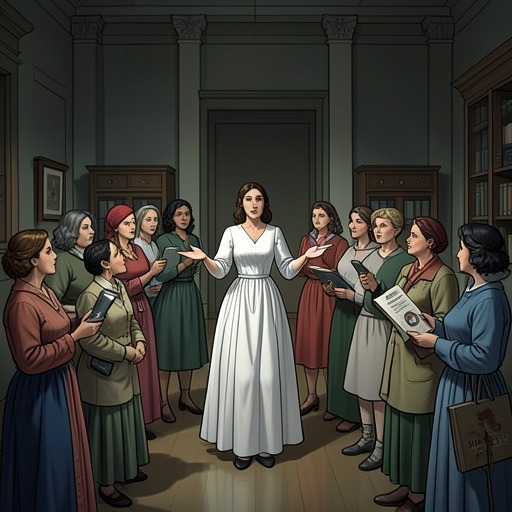
The theatrical work at the book’s center grew from interviews with more than two hundred women. Eve Ensler spoke with older and younger women, married and single women, lesbians, college professors, actors, corporate professionals, and sex workers; the interviewees also included women from a range of racial, ethnic, and religious backgrounds. Many were initially reluctant to speak. Once they began, however, they were difficult to stop. That change—from reserve to sustained testimony—shows how a shared space for speaking can loosen the restraint imposed by taboo.
The book’s account of those interviews makes variety essential to its understanding of violence. There is no single experience that can stand in for every woman’s life: age, sexuality, race, occupation, and other circumstances shape what women report and how their accounts enter public discussion. When the work traveled, women regularly approached Ensler after performances to tell their own stories, offer suggestions, and describe their responses. The exchange continued beyond the stage. The audience was not only receiving a performance; it was also becoming a gathering place where accounts could be heard and acknowledged.
Unequal exposure and access to help
The text gives particular attention to women without homes and to the ways poverty can compound the consequences of abuse. The narrator describes ten years of active involvement with women she calls friends, including running recovery groups for women who had been raped. She also notes that poor women’s experiences of sexual violence often go unreported and that women in these circumstances may lack access to therapy or other means of healing.
The consequences described are cumulative: repeated abuse can erode self-esteem and contribute to pathways involving drugs, prostitution, AIDS, and, in many cases, death. The book contrasts that pattern with an account in which a woman meets another woman in a shelter, they fall in love, and their relationship enables them to leave the shelter system and build a different life. The contrast does not erase the structural deprivation surrounding the story; it shows how connection can alter an outcome that the surrounding conditions make perilous.
The book also situates testimony within the unequal conditions of education and political access. At one college described in the text, 45 percent of students were Black and Hispanic, most were the first in their families to attend college, and more than 65 percent came from families with annual incomes below $35,000. The narrator says these students had generally encountered little feminist writing or thought. Their response to the work therefore took place in a particular institutional and economic context, not in an abstract audience. The passage underscores that access to feminist ideas, as well as access to healing, is unevenly distributed.
From disclosure to organized action
For the narrator, hearing accounts of abuse initially produced a sense that a forbidden realm had opened and that knowing these things was dangerous. That response gives way to a firm conclusion: stopping violence against women is of overriding importance. The book frames the harm not only as injury to individual women but as a failure to honor and protect life. Its language broadens the stakes, arguing that violence destroys the life-giving energy on which human communities depend.
In 1997, the narrator met with a group of activist women, many associated with Feminist.com, and they formed V-Day. The movement emerged from The Vagina Monologues as an energy, catalyst, and day devoted to ending violence against women. Its stated mission is to increase awareness through events and media while raising funds for organizations working to ensure women’s safety. The emphasis on both awareness and funding matters: public speech can make violence harder to ignore, while resources support organizations doing the work of protection and change.
The book presents V-Day as an ongoing undertaking rather than a single commemorative performance. It declares Valentine’s Day V-Day until violence against women stops, after which the day is to become Victory Day. Within three years, the movement had raised and donated more than a million dollars to grassroots organizations working against violence worldwide. The figure gives material scale to the shift from telling stories to directing support toward organizations, even as the stated endpoint remains a future in which the violence itself has ended.
Meaning and limits of witnessing
The book’s central movement—from unnamed body, to interview, to performance, to organized support—makes witnessing a method of public recognition. It shows how experiences kept private can become speakable when women are given room to describe them, and how that speech can prompt listeners to respond beyond the immediate encounter. The many women who approached Ensler after performances extend the work’s structure: each telling becomes part of a larger, continuing exchange rather than a final account delivered from a stage.
At the same time, the text does not treat visibility as sufficient on its own. Poor women may face unreported abuse and little access to therapy; the book’s attention to recovery groups, grassroots organizations, and fundraising makes clear that acknowledgment must be joined to practical support. Its account therefore holds two demands together: break the silence that protects violence from public recognition, and change the conditions that restrict women’s safety and access to help. The subject remains an ongoing crisis, while the book’s proposed response is equally ongoing: listen, name, organize, and direct resources toward ending it.